Showing posts with label War of the Worlds. Show all posts

Saturday, December 25, 2010

Fantasy Film Worlds of George Pal

The 1985 documentary, Fantasy Film Worlds of George Pal, provides an overview of the career of the famed animator, producer, director, writer and stop-motion pioneer as simply as it possibly can: It shows archival interviews with Pal, brief snippets of praise from both peers and acolytes and loads of scenes from his movies. In other words, it goals are modest, it's subject straightforward and it has no concerns with breaking new ground in documentary film making. Simply put, it's object is to show a lot of clips while giving the viewer the understanding that much of fantasy and science fiction of the sixties onward was heavily influenced by Mr. Pal. This isn't a documentary for fans of Ken Burns or Errol Morris. Fans of Barbara Kopple, don't bother. This documentary isn't about finding profound meanings hidden in the nooks or exploring the central core of Pal's being. It's about how cool the movies were that he made and how much they changed the landscape of fantasy/science fiction.

The point is made early, as in right in the opening scene, which isn't from a Pal movie at all, but Gremlins. This is followed by shots of E.T.,the Extra-Terrestrial and Close Encounters and the message is immediately clear: Pal paved the way for the fantasy/sci-fi of today. But in watching the documentary one also gets the impression that his legacy may also be that a kind, gentle and generous person can actually succeed in Hollywood.

It's expected in a documentary of this sort that no one interviewed will have anything bad to say ("I hated that bastard!") but the sheer volume of praise from the wide variety of actors (Russ Tamblyn, Charlton Heston, Tony Curtis, Rod Taylor, Janet Leigh, etc) and the sincerity with which they give it makes one feel an immediate affection for Pal. All of them talk about the confidence he had in them, the exuberance, the sheer unswerving optimism, all from a man who fled Nazi Germany (unlike Veit Harlan) and then, seven years later, had to flee again (he had fled to Holland then left for the United States just before Germany invaded). He saw how bad the world could get but always knew it could be better.

And hard working? They don't make 'em as hard working as George Pal anymore. He built his career around the success of his stop-motion animation, later to become his famous Puppetoons, only it wasn't claymation, it was replacement animation! That means every time a character changed expression, or walked, or waved their hand or freaking blinked(!), a new puppet figure had to be inserted. His charts and storyboards for this were so detailed it made the operation schematics for the construction of the atomic bomb look like a recipe for boiling water. This fascination with detail and the nuts and bolts of things is what contributed to his greatest successes in live action when the time came.

Ray Bradbury comments, correctly, that Destination Moon was the first sci-fi film all about the science. It's all about how the rocket works and the journey there that matters, not actually being on the moon. And it was Pal's interest in solving problems that led him to provide efficient ways to communicate the science to the audience, like having the scientists show a Woody Woodpecker cartoon to potential investors to explain how the process of getting to the moon works. This technique was used again years later by Steven Spielberg in Jurassic Park when John Hammond (Richard Attenborough) shows everyone a cartoon to explain how the dinosaurs have been created.

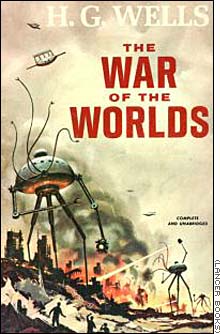
It's true, his movies are not masterpieces. The acting and writing seem unrefined at times and the budgets ran on the low side but, as stated again by Ray Bradbury, he did something very important for science fiction film: He made it respectable. Before Destination Moon, science fiction seemed entirely silly to most of Hollywood and most adult moviegoers but after Destination Moon, it proved it could take itself seriously and rake in the big bucks. It also helped that he hired the best artists and designers in the game, from the great matte artist Chesley Bonestell to model designer Albert Nozaki who created the iconic Martian spaceships for War of the Worlds.


George Pal continued to have success in film, most notably The Time Machine, with Rod Taylor and Yvette Mimieux in 1960, but it's his fifties sci-fi work that is most remembered today and clearly the most influential to future generations of sci-fi film makers. The pacing, style and action of today's sci-fi comes a variety of influences and directors such as Steven Spielberg and James Cameron but the idea that it could be something more than cheap serial fare came from Pal, and it's an idea I'm glad he didn't keep to himself.

_______________________________________


This has been a contribution post to the Steven Spielberg Blogathon hosted by Ryan Kelly and Adam Zanzie.

Wednesday, April 22, 2009

Spread of Activation VII: The Earth Day Edition


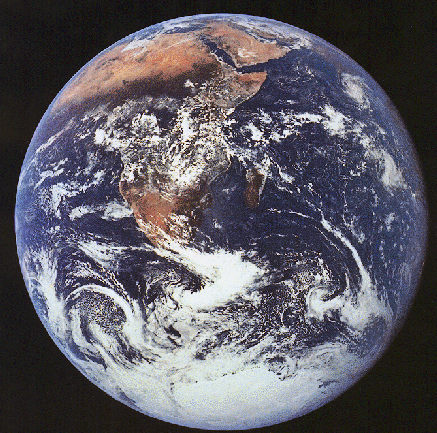
It's Earth Day and let's celebrate by bragging on how much aliens love our planet. They do! They can't get enough of it, from War of the Worlds to Independence Day they want the whole thing. In Close Encounters of the Third Kind they love us so much they're willing to travel light years, lots of 'em, just to say "Hi." Awww. In This Island Earth, despite being much more advanced than us scientifically, they want our help with their own planet Metaluna, and a couple of our best and brightest oblige. Sometimes we're naughty, and since they love us so much they feel the need to show us the error of our ways, like in The Day the Earth Stood Still where they gently but firmly tell us to stop our warring ways or they'll kill us. Gee thanks Dad! And in 2001: A Space Odyssey those aliens... well, okay who knows what in the hell they're up to but whatever it is, we're the centerpiece of their master plan. Yes, Science Fiction, beloved here at Cinema Styles, has always operated under the conceit that you just can't find a better planet than good old Mother Earth.

The great thing about most science fiction is that outside the gobbledygook of the basic plot they don't try to explain too much. It's usually kept to a couple of sentences revolving around our natural resources or danger to the rest of the galaxy or something stupid like that. And it's a good thing too because when you think about Earth centered sci-fi plots they never actually make much sense. For instance, take the "destroy and conquer" plots.

War of the Worlds and Independence Day are all about alien races envying what we've got here and wanting to take it for themselves. In War of the Worlds, they apparently buried tripods a million years ago with the intent of taking over the planet. Why they didn't just do it then when they would have encountered NO technological resistance I have no idea. Why they didn't research the environment to realize that bacteria present here would kill them is another mystery for the ages. They have the technology to form an invasion plan from millions of miles away over a thousand centuries but didn't bother to research the environment and how it interacts with their own biology. Wow, that's monumentally bad planning!

And how about the Independence Day dullards? They too can construct fleets of ships and massive mother ships to invade a world for it's resources when the gathering of resources from planets and asteroids is something even we already understand but lack the technology and money to get enough ships to the asteroids and planets to collect the resources. The aliens of ID4 do realize don't they, with their advanced technology, that they can strip mine the galaxy for all the resources they need without once having to actually mount an invasion? They realize that right? Oh no wait, of course they don't because Dean Devlin and Roland Emmerich are the guys that provided them with their motivation in the first place.

Or how about the "Earth is a danger to the rest of us" plot of The Day the Earth Stood Still? Ha! That's a laugh. People seemed to think in 1951 that nuclear weapons could destroy the universe. Your average humdrum star, going through the process of nuclear fusion constantly, produces more heat and radiation in a second than every nuclear weapon on Earth combined could ever hope to do. Which makes me think of The Day the Earth Caught Fire.

The Day the Earth Caught Fire has nothing to do with aliens, I know, but this ain't called Spread of Activation for nothing. See, in The Day the Earth Caught Fire, which is a great and underrated movie by the way, the Earth is thrown off of her axis by two hydrogen bomb tests by the United States and the Soviet Union done at the exact same time at the North and South Poles. Okay, first of all, even if a nuclear bomb could somehow move an object with a mass of 6,000,000,000,000,000,000,000,000 kilograms (6E+24 kilograms / 1.3E+25 pounds), and brother would that need to be one HUGE-ASS nuclear bomb, the fact that you have two at opposite ends would simply result in the two offsetting each other, further resulting in, well, nothing. For the plot to work it should just be one bomb, not two. Oh well, at least with a destroyed Earth no aliens are going to want to take it.

But what about destroying the Earth? Does Sci-Fi have anything to say about that? But of course it does! Everyone loves apocalyptic Sci-Fi. From asteroids to global warming to nuclear warfare Sci-Fi loves destroying the planet Earth. There's a new one coming out soon, 2012, and like the other ones it looks pretty stupid. My favorite in the field is probably the aforementioned The Day the Earth Caught Fire but for instant destruction I'll go with Deep Impact.

Deep Impact was released in 1998 in competition with another asteroid destruction movie, Armageddon. Deep Impact gets 5.9 on IMDB and Armageddon gets 6.0. This is important because it reminds me that most people who rate movies on IMDB are idiots and it's always good to remember that. Who knows, one day it may save your life. I don't know how, but I'm not ruling it out. Anyway, Deep Impact is a pretty good disaster flick as these things go. They do have their cake and eat it too of course by having the smaller non-planet killing asteroid hit so we can all enjoy the special effects and having the bigger planet killing one destroyed so we can all enjoy the happy ending. That was kind of chickenshit in my book but hey I understand the need for it. Besides in the instant destruction sub-genre you've got to show something to the audience. I mean, we paid money to see the planet killed, or at least injured. Which takes me to my final category, the slow death of the planet as exemplified by films such as Silent Running and Wall-E.

These don't work as well for me. Wall-E has an interesting nugget of a sci-fi idea but focuses on the robots instead of the people, which makes sense since it's mainly for kids. But for me it's like watching Star Wars where R2-D2 and C3PO are the main characters and everyone else is a bit player. Silent Running on the other hand has a very interesting main character played by Bruce Dern but a hard to swallow plot device: The Earth is now devoid of all plant life. Uh huh. As Carl Sagan said in Cosmos, "We need the trees much more than they need us." Without us the plants would be fine. Without the plants, and all apologies to Coruscant, we wouldn't be here. The idea of a functioning planet without plants is ludicrous but it's still a good movie with an interesting central character and a trio of droids (Huey, Dewey and Louie) that predate those previously mentioned Star Wars droids by five years. And it's one of the first major Sci-Fi movies with an environmental theme which makes it a good one to wrap up with on this Earth Day.

So Happy Earth Day everyone! Watch an Earth destruction Sci-Fi movie today. Sometimes the best way to appreciate what you've got is to see what it would be like if it were taken away.