Showing posts with label Star Wars. Show all posts

Friday, January 28, 2011

Why Science Fiction No Longer Appeals to Me

I started writing this post before The Siren published her post on science fiction films she likes a couple of days ago. This was unexpected. Having a post on sci-fi coincide with a post by The Siren's Farran Smith Nehme on sci-fi movies is a bit like putting up a post on westerns only to have Arbogast put up a list of his ten favorite John Wayne/John Ford collaborations at the same time. It's not impossible but you figured this was one area in which you'd never have to compete. As such, I've slightly altered this post in response to what transpired at The Siren's place where, as is common, her post has already logged 12,847 comments, or something close. I was the first to comment on the post and made reference to how Star Wars was not sci-fi. I now feel the need to defend that statement here which, it turns out, I was going to do anyway, deep within the post itself but only as side thought. Now, however, I feel I must make it more of a "front and center" kind of a statement. With that in mind, let us now delve into the original post itself, altered only slightly in response to The Siren's post.

*******************************


I have long since touted my love for science fiction on these pages and made clear that it was older sci-fi that appealed to me. In fact, so little modern sci-fi appeals to me that I have begun to wonder if I really love sci-fi at all or if I am simply nostalgic for the movies of my youth. At what point does saying sci-fi hasn't appealed to me in the last twenty years simply become an admission that I just don't like sci-fi or, at the very least, that it's not my favorite genre? But if it's not, why do I keep saying I love it so much?


Some of this question was answered for me the other day after I watched an episode of The Outer Limits, courtesy of my Amazon Video on Demand Library in combination with my Roku. And not just any episode but perhaps the most famous episode, Demon with a Glass Hand, written by Harlan Ellison. The episode is science fiction through and through. Most modern sci-fi isn't. I suppose the best place to start is by defining, to some degree, science fiction, at least to the degree to which we're discussing genre in film and television, not necessarily literature.

Genre definitions are often confused for setting by many people who associate tell-tale visuals with similar story lines. Genre, of course, is not setting, not location, but story and how that story is told. A musical has no setting, it can take place in Hollywood at the advent of the sound era (Singin' in the Rain), in Paris during the fifties (An American in Paris) or in Russia in 1905 (Fiddler on the Roof). The location's not the thing, it's the telling of the story through song that is. Similarly, a western can take place in the desert (Stagecoach), a mountain valley (Shane) or outer space (Outland). It doesn't have to be in the west, it has to tell its story in a certain way, although, unlike any other genre, its very title, Western, denotes a location. A horror movie can be about fantastical monsters or down to earth serial killers and it can take place any place, any time. Again, setting doesn't matter, story does.

And so, while watching and enjoying Demon with the Glass Hand I couldn't help but think about science fiction and how it too relies on story, not location. Science fiction, to take its most basic definition straight from the first line of its entry on Wikipedia, "is a genre of fiction dealing with the impact of imagined innovations in science or technology, often in a futuristic setting." Demon with a Glass Hand deals with technology directly as the thrust of its story. A man, Trent (Robert Culp), is being pursued by an alien race who want control of a glass computer attached to his wrist in the form of a hand. This alien race attacked earth 1,000 years into the future and have now chased Trent back through time to acquire the computer because only it knows what happened to humanity: all humans vanished without a trace after the invasion and the aliens began to mysteriously die off.

Demon with a Glass Hand takes place in the present day and almost entirely inside an abandoned office building. The location doesn't make it science fiction, the story does. To help understand that statement better, let's use Star Wars as an example.

Star Wars takes place in space, on distant planets and, most famously, in a galaxy far, far away. This has caused many to confuse location with story but the story is clearly one of mythological fantasy, not science fiction. The story is about dark lords and princesses and knights, not technology turned against man ala Blade Runner or The Terminal Man. It's not about the exploration of alien races ala 2001: A Space Odyssey or Close Encounters of the Third Kind although it clearly does include alien races of all kinds. But the story - the story - isn't about anything technical or scientific, it's about mythology.

Most people wouldn't look at a movie that takes place in France, say, Les Diaboliques, and happily claim, "It's a musical!"

"Why," you might ask.

"Because," they respond, "it takes place in France. Like Can-Can, Gigi, An American in Paris, Les Miserables..."

They continue because, well, a lot of musicals take place in France. But just because a movie takes place in France, that doesn't mean it's a musical, does it?

Star Wars runs into this same problem. "How's it not sci-fi? It takes place in space!" Yes. Yes, it does. But it's story is rooted in fantasy, adventure and mythology. It's comparable to the Lord of the Rings trilogy, not The Matrix trilogy. As Ebeneezer Scrooge might say, "There's more Mists of Avalon than Avatar about you."

But what does any of this have to do with me not liking science fiction. Because science fiction tends to mix the fantasy/mythological/action elements in these days and less the pure sci-fi. Star Wars goddamn space setting all but assured that the sci-fi of 2001: A Space Odyssey would take a back seat to sci-fi more concerned with action than ideas.

None of this is to say that a generous portion of sci-fi hasn't always done this anyway, but for every action-filled War of the Worlds there was a Destination Moon, Forbidden Planet, Day the Earth Stood Still or The Incredible Shrinking Man. Special effects played into all of those but it was the ideas held the movies together, not the action. When it comes to the ideas holding everything together it seems television is the last holdout for sci-fi purists (literature, of course, remains free of this problem).


Television gave us Star Trek (in all of its permutations), Space 1999, The X-Files and Lost which all concentrated on story over action. The cinema continues to deliver sci-fi but even the best of it, like Terminator (which borrows heavily from Ellison's Soldier episode of The Outer Limits), tends to cross genres and end up more as an action/thriller than pure sci-fi. Probably the best sci-fi movie I've seen in the last twenty years would be Steven Spielberg's A.I.: Artificial Intelligence which took a science fiction story and didn't back away from it by injecting large amounts of action and adventure. Another Spielberg sci-fi, Minority Report, does an excellent job as well but definitely leans more towards being classified as a mystery/thriller than science fiction. A.I. is pure sci-fi, and maybe that's why it's among my favorites in the genre even if movies like A.I. don't come along very often anymore.

So, do I still like science fiction movies? Yes, very much. I just don't like the more action/thriller oriented sci-fi movies of today, I suppose, which is kind of like being a fan of a dead language. I like it but no one uses it anymore and finding it in its pure form seems harder and harder, although it does exist (Moon, Primer). But for better or worse, most cinematic sci-fi now means sci-fi/action/thriller with no signs of turning back. As Caesar might say, "Alea iacta est."

************************


Since I only mention the Star Wars genre mash-up briefly, I thought it might be of help to link to another article that covers it completely. It wasn't hard to find one and this one, Star Wars is not Science Fiction, seems to cover it more thoroughly than any other I found. It delves into sci-fi literature as well and raises many of the same points I raise here about location and setting but goes a bit further into what makes a story "science fictional" in its telling. I recommend it highly as a deeper examination of what I only touched on here.

Saturday, October 9, 2010

A Time for BAMFs

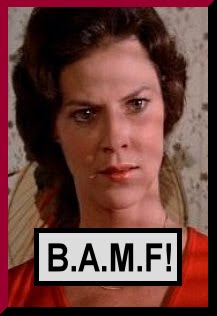
As Footloose taught the world, there is a time for everything. I spend most of my time here deconstructing movies in one way or another in an effort to continually better my understanding of them and, as a result, watch movies with a sharper, more discerning eye than I ever did in my cinematic infancy. But sometimes I just don't have time for that 'cause I'm too busy thinking, "That is one badass mutha fucka!" So alert Kevin Bacon, because it's October and that means it's time for some shout-outs to my favorite BAMFs of horror and sci-fi!

Now this won't be a list per se, more a haphazard collection of thoughts on some of my favorite BAMFs in the horror/sci-fi universe that kind of, sort of forms a list-like thing. Plus, there's no rules. Sometimes it's a character, played by multiple actors, sometimes it's a particular actor playing a particular character. Sometimes it's lead, sometimes supporting. I guess the only thing I'm going to purposely avoid are the characters that are written as badasses, you know, the Vin Diesel or Arnold Schwarzenegger types or what Ripley became to the Alien series. Ah, hell, let's just get started?

- The BAMF that got me thinking up this whole thing in the first place is Peter Cushing as Doctor Van Helsing. Now this is a perfect example of what I'm talking about because Van Helsing's been played a million times, from Edward Van Sloan's unflappable Nosferatu obsessive in the original adaptation of the stage play of Dracula (1931) to Anthony Hopkin's rather loud and excitable vampire hunter in Bram Stoker's Dracula (1992). But nobody, and I mean nobody, got Van Helsing as undead-on right as Peter Cushing.

When you watch Cushing at work in Horror of Dracula or Brides of Dracula, you see an actor at the top of his form, yes, but also an actor who understands the character he's playing better than anyone else before or since. When it comes to playing Van Helsing, Cushing really is the smartest guy in the room. He's got the analytical side, the blood-vengeance side and, above all, the cool-in-the-face of terror side that makes his Van Helsing the best there is to offer. Take away his hammer, stake and crucifix and this mutha will grab a pair of candlesticks, construct a makeshift cross and bring the curtains down, literally, to do away with your sorry blood-sucking ass. Bite him on the neck and leave him for undead and guess what? He's going to whip out some holy water and a hot iron and burn your filthy disease right out of his body while another couple of vampires look on in stunned amazement. When all's said and done, there's no doubt about it: Peter Cushing's Van Helsing in one Bad Ass Mutha Fucka!

- Now for a character from a series of movies I usually give a pretty hard time here at Cinema Styles: Obi-Wan Kenobi in the Star Wars Saga. Now, it's true, I got my problems with the saga overall but there's no questioning old Ben Kenobi's official BAMF status. And for the purposes of this inclusion please understand, I'm not talking expanded universe, I'm talking about the movies that were released. So I don't really care if there's some bigger bad-ass in Jedi Exile: The Journey to Malachor V or if something that happens in the movies is explained away in The Great Sith Encasement, Episode 17. Really, it's not possible for me to give even two shits less than I already do on that front. But Kenobi in the movies is number one, unquestionably.

When Darth Maul takes down everyone who stands in his way, including Kenobi's own mentor Qui-Gon Jinn, Kenobi leaps up from a prone position, grabs his saber in mid-air and slices the Sith shitheel in half. Anakin Skywalker, darkside Jedi at the height of his powers? Ha, ha, that's funny, because while Anakin can kick everyone's ass, from Count Dooku to an entire village of sand people, he can't do shit to Obi-Wan. In fact, when Anakin attempts a leap-in-the-air-from-prone-position finisher like Obi-Wan did with Darth Maul, he gets the legs cut out from under him, literally, and an arm too, just for good measure. Years later, an old Obi-Wan doesn't even break a sweat holding off Anakin, now Darth Vader. It takes Luke giving in to his anger to defeat Vader in Return of the Jedi but Obi-Wan? Sheeee-it, he not only dies of his own choosing but - and think about this - has the situation so under control he can actually take the time to look over at Luke, and mull it over first(!), while in the middle of a lightsaber duel with Vader! Obi-Wan Kenobi - Bad Ass Mutha Fucka!

-Next up, Rosemary Woodhouse from Rosemary's Baby. Yeah, yeah, I know, you're thinking, "Don't you mean Sarah Connor from The Terminator or Ripley from Alien?" No, I don't. See, they're like the Diesel/Schwarzenegger characters, as in, prepackaged badasses, even if theirs were quite a bit better rendered than any Diesel or Schwarzeneggar characters ever were. Besides, you know how every now and then you stumble upon (usually by, in fact, using StumbleUpon) some list of the top ten this or that in the movies and the lists always suck because their choices are SO FUCKING OBVIOUS! That's because they're written by and for idiots who have no real connection to the movies or understanding of dramatic conflict. Well, guess what? Those guys would put Ripley and Connor on their list of badasses and for Star Wars, they'd list Vader, not Obi-Wan. Whew... so, back to Rosemary.

Rosemary's a badass because, in the end, she takes control and doesn't look back. Her husband, her doctor and seemingly every member of the AARP do their level best to marginalize her out of existence but when it comes time to walk the walk, Rosemary does a full-on strut! Keep in mind, this is a woman who was roofied by Satan and had her baby stolen by the Beelzebub Chapter of the Boynton Beach Club and she still has enough guts to 1) yell at everybody for what they did to her baby, 2) shove Roman's lies right back in his face ("Shut up. You're in Dubrovnik, I can't hear you.") and 3) in the middle of listening to a bunch of old witches bitch about how she's unfit, pick that baby right up and say, "Fuck it! It's here, it's mine and I'm taking care of it." She owns the situation and everyone present. Only one thing left to say: Bad Ass Mutha Fucka!

- And speaking of mothers, how about Diane Freeling in Poltergeist? Seriously, think about how much she does in that movie. First, she handles the loss of a pet with aplomb. Second, she's naturally curious, not scared, of the strange phenonemon taking place in her house. And on top of that, she never looks exhausted and worn out like hubby Steve Freeling does even though she's handling much more. When her daughter gets taken she bucks up, brings in people to explain the options and stands at the fore (remember when the ghosts start descending the stairway and she's right there, ready to go up those stairs to meet them?). When someone has to go into the void to get their daughter, Steve says he'll do it but she gives him some malarkey about how they need him to hold the rope and yadda, yadda, yadda. We all know the real reason is because he'd fail. Here's why (and I say this in all seriousness): Once, at work, I heard two people talking, one of them complaining about a seemingly impossible series of tasks that would have required either several people or one person with eight arms. That's when the other one said, "A mother could do it." She was, of course, a mother. That was before I was with my wife and our children but now that I am let me just say, "Yup."

So anyway, she goes in, gets her daughter and comes back out. Later, the gates to hell relocate to the closet in the kids' bedroom and Diane is thrown against the floor, walls and ceiling of her bedroom to prevent her from reaching her kids. She gets out. Then, the hallway elongates to the point where running gets her nowhere. But she keeps running anyway and eventually, she gets out of that one too. Then, when she swings the door open to the kids' room she damn near gets sucked in to a full-fledged vortex. But she doesn't. Know what she does? With one arm on the door frame and one arm holding onto her kids against 200 mile-per-hour sucking winds, she pulls those goddamn kids out, that's what she does. And I didn't even mention the monster in the hall, the corpses in the pool or the completely useless idiot neighbor. Diane Freeling gets everybody out to safety, no exceptions. After doing all the dirty work all hubby Steve has to do is get everyone in the car and drive them to a motel. Lucky for him his wife is one Bad Ass Mutha Fucka!

- Let's top out our first five with Father Damien Karras in The Exorcist. Karras is different kind of badass because everything that makes him a badass comes as the final culmination of taking one flying turd in the face after another. Damien Karras is a priest the world has decided to shit on, daily. He's stressed out and broke, has to go to New York weekly, from Washington, D.C., to take care of his ailing mother, then deal with her being in a horrible nursing home until she dies alone and depressed while he's 300 miles away. If that weren't bad enough, he's brought into a bad situation with a demon-possessed girl who insists on vomiting on him when he asks her to back up what she's saying about his dead mother. And through it all, he follows the rules. He does his duty, to a fault. He psychoanalyzes and when that doesn't work he goes to the church and asks for special permission to conduct an exorcism. When he's told "No, but you can assist this old bastard we know who'll run the show," he doesn't complain. When he tries to fill the old guy in on what they're about to walk into ("The demon seems to have three distinct personalities") he's rudely cut off ("There is only one!"). While most of us would respond with, "Hey, fuck you, I'm just trying to help," old Damien keeps quiet. When he walks in the room and the demon looks like mom and he yells "You're not my mother!" and starts crying and the old guy says to leave, he does.

But then, when he comes back in and the old guy's dead and the demon possessed girl is on the bed, giggling, brother, he's done! He's tried talk. He's tried following church procedure. He's tried doing what the old guy says. And now, finally, Karras' true badass self emerges as he quietly says in his head, "Man, fuck it, it's clobbering time!" What follows must surely be the only time in cinematic history that the sight of a grown man viciously pummelling the face of a 12 year old girl is not only welcome, but encouraged. But that wouldn't make Karras a badass of the Mutha Fucka variety. No, you know what it is that does that, right? It's when he makes his whole goddamn life worthwhile in one single instant by saying to the demon, "Come into me! Take me!" He's saving the girl and sacrificing himself at the same moment. People, that's not just a hero, that's a Bad Ass Mutha Fucka!

And that's it for now. Sure there are millions more I could have done but I'm hoping these were the less obvious choices than, say, Taylor from Planet of the Apes (although I in no way deny his status as a fully licensed BAMF). Also, another non-obvious runner-up: Dave Bowman from 2001: A Space Odyssey. HAL kills everyone on board and then tells a stranded Dave that he isn't going to open that pod bay door and that Dave is screwed because he doesn't have his helmet so he can't come in manually. And you know what Dave does? He comes in manually anyway, without a helmet, and takes HAL apart! After that he follows his own destiny to beyond the infinite and becomes the star child who will provide the next step in our intellectual evolution. Awww, fuck yeah!

And so I leave you with dreams of your own favorite BAMFS of sci-fi and horror. To paraphrase the immortal words of Mr. Bacon, there is a time to laugh and a time to weep, a time to mourn and there is a time for BAMFs. Everybody dance!

Wednesday, September 29, 2010

The King of the Retro-Fit, or:Why I Hate George Lucas

I don't actively hate George Lucas. I don't even dislike him. But he gives me that "God, I hate that guy!" feeling enough times that I think subtitling a piece, "Why I Hate George Lucas" is perfectly acceptable. And right now I have that "God, I hate that guy!" feeling all over again. See, George is going to convert all six Star Wars films to 3-D for theatrical re-release starting in 2012. Maybe the world does end then, after all. And I'm not pissed because he's taking an overly expensive, screen-darkening trendy fad and giving it unneeded and unwarranted extra life, although that's bad enough. I'm pissed because movies, particularly popular effects movies, are being lost as artifacts of their time. Let me explain.


I love science fiction movies, primarily older science fiction movies from the fifties. I love Forbidden Planet and Earth vs. the Flying Saucers. I love The Day the Earth Stood Still and Invaders from Mars. I love The Incredible Shrinking Man, Them!, War of the Worlds and every other great or not so great sci-fi flick of the fifties and sixties and I even love At the Earth's Core and Logan's Run from the seventies too. And a part of why I love them is their lack of seamless perfection. I don't ever, EVER, want to see Doug McClure and Peter Cushing in a CGI-enhanced Earth Core drilling machine thingy. I want to always see them in that glorious throwback of a machine created for the original 1976 movie. I don't ever want the ants in Them! to look like honest-to-goodness real live ants, I want them to look like those big furry props that grab a hold of James Whitmore and don't let go. And, dammit, I want (and really would have fucking loved, George!) to have the original Star Wars Trilogy look the same from when I first saw them.

"But wait," you say, "Didn't they release (for a limited time) the original, unaltered films on DVD as part of a boxed set?"

Yes, they did and no, I didn't buy it because I cannot invest that kind of money in a box set. And it's not really what I mean anyway. What I mean is, despite being technically available, the original unaltered trilogy will never, ever be shown on cable or television again. All anyone is ever going to grow up seeing are the altered versions and that's a shame and a real loss. I understand the arguments for updating it to keep it going from generation to generation and keep the profits rolling in. I understand, I just don't care. I think it's important for people, film fans whether casual or hardcore, to enjoy a film for its place in history as well as for its technical specifications. When Gus Van Sant remade Psycho shot for shot in 1998, he proved, whether unwittingly or not, that a film does not just rise or fall dependent upon it's exacting technical content but upon when that content was originally done as well.

A film is a time-capsule and an archaeological object as well as a work of art. It is a piece of frozen time whose importance is, in the end, a lot more tied to historical significance than its bottom line. Watching an older movie takes me to another time in history and watching a movie I love takes me to the time in my life when I fell in love with it. Increasingly, all I see when I watch Star Wars (which, for these purposes is rhetorical because I don't watch it much these days) is a product that keeps getting a "New and Improved" sticker slapped on it. I'd love to say I've seen the trilogy and that's that but I know I haven't. I know that it will continue to be changed, most likely long after George Lucas' death, as he has probably already laid out in his will that the trilogy should be technologically updated in perpetuity with the requisite re-release for each new retro-fit. I wouldn't even be surprised if, eventually, it doesn't star Mark Hamill, Carrie Fisher or Harrison Ford but rather whoever the big new stars are of the day, digitally inserted to keep the next generation interested.

My advice to everyone who wants to pass on the magic of Star Wars to their kids: Show them something else. Show them the great sci-fi of the fifties, sixties and seventies and the cheesy ones too. Show them Forbidden Planet and Planet of the Apes and Fantastic Voyage and Soylent Green and even Lucas' THX1138 and make sure you give them a healthy dose of Amicus while you're at it. Because it's those films that represent the true feel and time of the original trilogy, not that fleeting, ephemeral thing that's out there now that changes so much it's become impossible to ever actually see the final product. It's like Star Wars doesn't even exist anymore. It's a spirit, a phantom, but not necessarily a menace. More just a waste of time.

Wednesday, April 22, 2009

Spread of Activation VII: The Earth Day Edition


It's Earth Day and let's celebrate by bragging on how much aliens love our planet. They do! They can't get enough of it, from War of the Worlds to Independence Day they want the whole thing. In Close Encounters of the Third Kind they love us so much they're willing to travel light years, lots of 'em, just to say "Hi." Awww. In This Island Earth, despite being much more advanced than us scientifically, they want our help with their own planet Metaluna, and a couple of our best and brightest oblige. Sometimes we're naughty, and since they love us so much they feel the need to show us the error of our ways, like in The Day the Earth Stood Still where they gently but firmly tell us to stop our warring ways or they'll kill us. Gee thanks Dad! And in 2001: A Space Odyssey those aliens... well, okay who knows what in the hell they're up to but whatever it is, we're the centerpiece of their master plan. Yes, Science Fiction, beloved here at Cinema Styles, has always operated under the conceit that you just can't find a better planet than good old Mother Earth.

The great thing about most science fiction is that outside the gobbledygook of the basic plot they don't try to explain too much. It's usually kept to a couple of sentences revolving around our natural resources or danger to the rest of the galaxy or something stupid like that. And it's a good thing too because when you think about Earth centered sci-fi plots they never actually make much sense. For instance, take the "destroy and conquer" plots.

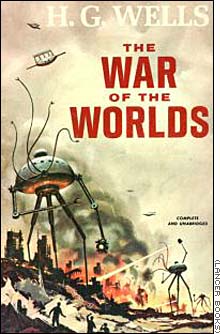
War of the Worlds and Independence Day are all about alien races envying what we've got here and wanting to take it for themselves. In War of the Worlds, they apparently buried tripods a million years ago with the intent of taking over the planet. Why they didn't just do it then when they would have encountered NO technological resistance I have no idea. Why they didn't research the environment to realize that bacteria present here would kill them is another mystery for the ages. They have the technology to form an invasion plan from millions of miles away over a thousand centuries but didn't bother to research the environment and how it interacts with their own biology. Wow, that's monumentally bad planning!

And how about the Independence Day dullards? They too can construct fleets of ships and massive mother ships to invade a world for it's resources when the gathering of resources from planets and asteroids is something even we already understand but lack the technology and money to get enough ships to the asteroids and planets to collect the resources. The aliens of ID4 do realize don't they, with their advanced technology, that they can strip mine the galaxy for all the resources they need without once having to actually mount an invasion? They realize that right? Oh no wait, of course they don't because Dean Devlin and Roland Emmerich are the guys that provided them with their motivation in the first place.

Or how about the "Earth is a danger to the rest of us" plot of The Day the Earth Stood Still? Ha! That's a laugh. People seemed to think in 1951 that nuclear weapons could destroy the universe. Your average humdrum star, going through the process of nuclear fusion constantly, produces more heat and radiation in a second than every nuclear weapon on Earth combined could ever hope to do. Which makes me think of The Day the Earth Caught Fire.

The Day the Earth Caught Fire has nothing to do with aliens, I know, but this ain't called Spread of Activation for nothing. See, in The Day the Earth Caught Fire, which is a great and underrated movie by the way, the Earth is thrown off of her axis by two hydrogen bomb tests by the United States and the Soviet Union done at the exact same time at the North and South Poles. Okay, first of all, even if a nuclear bomb could somehow move an object with a mass of 6,000,000,000,000,000,000,000,000 kilograms (6E+24 kilograms / 1.3E+25 pounds), and brother would that need to be one HUGE-ASS nuclear bomb, the fact that you have two at opposite ends would simply result in the two offsetting each other, further resulting in, well, nothing. For the plot to work it should just be one bomb, not two. Oh well, at least with a destroyed Earth no aliens are going to want to take it.

But what about destroying the Earth? Does Sci-Fi have anything to say about that? But of course it does! Everyone loves apocalyptic Sci-Fi. From asteroids to global warming to nuclear warfare Sci-Fi loves destroying the planet Earth. There's a new one coming out soon, 2012, and like the other ones it looks pretty stupid. My favorite in the field is probably the aforementioned The Day the Earth Caught Fire but for instant destruction I'll go with Deep Impact.

Deep Impact was released in 1998 in competition with another asteroid destruction movie, Armageddon. Deep Impact gets 5.9 on IMDB and Armageddon gets 6.0. This is important because it reminds me that most people who rate movies on IMDB are idiots and it's always good to remember that. Who knows, one day it may save your life. I don't know how, but I'm not ruling it out. Anyway, Deep Impact is a pretty good disaster flick as these things go. They do have their cake and eat it too of course by having the smaller non-planet killing asteroid hit so we can all enjoy the special effects and having the bigger planet killing one destroyed so we can all enjoy the happy ending. That was kind of chickenshit in my book but hey I understand the need for it. Besides in the instant destruction sub-genre you've got to show something to the audience. I mean, we paid money to see the planet killed, or at least injured. Which takes me to my final category, the slow death of the planet as exemplified by films such as Silent Running and Wall-E.

These don't work as well for me. Wall-E has an interesting nugget of a sci-fi idea but focuses on the robots instead of the people, which makes sense since it's mainly for kids. But for me it's like watching Star Wars where R2-D2 and C3PO are the main characters and everyone else is a bit player. Silent Running on the other hand has a very interesting main character played by Bruce Dern but a hard to swallow plot device: The Earth is now devoid of all plant life. Uh huh. As Carl Sagan said in Cosmos, "We need the trees much more than they need us." Without us the plants would be fine. Without the plants, and all apologies to Coruscant, we wouldn't be here. The idea of a functioning planet without plants is ludicrous but it's still a good movie with an interesting central character and a trio of droids (Huey, Dewey and Louie) that predate those previously mentioned Star Wars droids by five years. And it's one of the first major Sci-Fi movies with an environmental theme which makes it a good one to wrap up with on this Earth Day.

So Happy Earth Day everyone! Watch an Earth destruction Sci-Fi movie today. Sometimes the best way to appreciate what you've got is to see what it would be like if it were taken away.

Friday, May 16, 2008

But How Strange the Change From Major to Minor


A lot can change in 27 years. That's how long it's been since the original Raiders of the Lost Ark and it's been nearly two decades since the last one, Indiana Jones and the Last Crusade. Look at it this way: Two of the biggest adventure hits of 1954 were 20,000 Leagues Under the Sea and The Naked Jungle. Now imagine Kirk Douglas and Charlton Heston making sequels to those movies in 1981, 27 years later. By 1981 the movie landscape was decidedly different than it was in 1954 and 2008 is decidedly different than 1981. Maybe I'm wrong, but I don't sense the excitement about a new Indiana Jones film like I did in the eighties. When the other two sequels were released they, like the Star Wars sequels The Empire Strikes Back and Return of the Jedi, were the summer movies to see. Now Indiana Jones is practically lost in the shuffle. Iron Man and the next installment of Batman have generated far greater buzz and even Speed Racer has it's share of enthusiastic defenders.

One could sense the change with the release of Revenge of the Sith in 2005. It was the biggest money maker of the year to be sure but was it exciting? Was it an event? Was it the movie to see? No. And not because of any standard of quality (although full disclosure: I was underwhelmed in the extreme with all three later episodes and could live another 1,000 years without a desire to watch them again) but because there was too much competition. Among the top ten moneymakers of 2005 that could be considered direct competition with Revenge of the Sith were The Chronicles of Narnia, Harry Potter and the Goblet of Fire, War of the Worlds, King Kong and Batman Begins. Two decades earlier and any one of those would have been the movie event of the summer but now there's an event every other weekend.

And quite frankly, with the possible exception of Batman Begins, I don't believe any of those films have had the lingering sense of fan devotion that the original Star Wars or Indiana Jones movies did, and part of it is simply because there's a new blockbuster each week. And that's fine, I'm not making a judgment call. If the summer audiences want one special effects popcorn flick after another and the studios can provide them it makes perfect business sense to me to give the ticket buyers what they want. It's just that the blockbuster has lost its luster, so to speak (there's a rhyming couplet to be had with those two words but I don't feel like figuring it out).

[Warning: Good Old Days Geezer Alert!]

Back when I was a kid the blockbuster was an event. Each year promised a high profile movie that some studio would sink all their money into and everyone had to see it. Since the success of Star Wars was unanticipated by the movie going crowd (that is, we weren't waiting and waiting for it to be released, it just kind of happened) my first recollection of an anticipatory blockbuster was The Empire Strikes Back. Oh Dear Lord I couldn't wait to see that damn thing. My friend, Chris, had read the Star Wars fiction released in between the two and told me all about Darth Vader falling into a volcano and that's why he had to wear the suit. Wow! How cool was that? Little did I know when I finally saw it happen in 2005 I would be stifling yawns during the climax. And of course the Star Wars fiction made absolutely no mention of Vader's name or who he was so the whole "Father" moment was absolutely flooring (although since Vader actually means 'father' I'm curious why this was not picked up on sooner by the adults seeing the movie. Were people just that un-curious and intellectually lazy back then? Nowadays the 'Vader' thing would've been blown after the first showing of the first movie).

The next E-V-E-N-T was Raiders of the Lost Ark. It came out the following year (nowadays it would have come out the following weekend - Hey, I didn't put that geezer warning up for nothing) and again I was just crazy to see it. But this time something strange occurred: After I saw it, and loved it, I didn't go back. Now with Star Wars and Empire I had gone back multiple times to see them again and again in the theatre. With Raiders, once was enough. Not because of the movie, but because, well, I just didn't feel the need. By 1981 I was knee deep in my early days of cinephilia and the movies I wanted to see again and again were Citizen Kane and anything foreign. We had just gotten a VCR (cost somewhere around $900 - In 1981 dollars!) and I was constantly renting video after video of whatever old or foreign films they had (for the curious, the first video I ever rented was Dr. Strangelove). My days of haunting the theatre to see the newest blockbuster again and again were over, and I hadn't even gotten my first pimple yet. And believe it or not, I'm not just thinking of this for the first time because I'm writing this entry for a blogathon. I have often thought of Raiders of the Lost Ark as the turning point blockbuster for me. It was, through no fault of its own, the first blockbuster I didn't return to in the theatre. When I didn't go back multiple times I knew I had changed. I watched it again on video and later on DVD and enjoyed it immensely. I think it's a great adventure movie and had it occurred just a year or two earlier it probably would have meant a hell of a lot more to me. But it came at just the wrong time for me to fully appreciate it. It came at a time when my obsession with art was in full blossom and I was more interested in torturing my mother with videos of Truffaut and Godard than seeing blockbusters. I wanted to see what all the hoopla was about with Last Year at Marienbad. I wanted to see The Magnificent Ambersons and The Lady from Shanghai. I wanted to see Shadow of a Doubt and Vertigo. I wanted to see Nashville. I wanted to see Britannia Hospital and If. I wanted to see so much and I didn't have the time to see them all if I was constantly returning to the theatre to see the same movie again.

That's not to say I don't watch movies repeatedly, I do. I just don't watch them repeatedly with only days or weeks in between the viewings. And because my time is so constricted now I can't even imagine watching the same movie a second time before watching a fresh movie in between. There's still too much I need to see and I'm sure as hell not going to pass up the opportunity to watch a movie I have heard and read about for years but haven't seen yet to see some summer movie again that I just saw a week before. I have stacks of DVDs of highly regarded English and Foreign Language films that I still haven't seen so when I have time I try to watch one of those instead.

And now here it is, 27 years later and I'm knee deep in my cinephilia again. Netflix affords me the opportunity to catch up on so many movies I have missed and the AFI Silver theatre, just 20 minutes walking distance from where I live, is constantly showing highly regarded as well as little known cinema classics, both foreign and domestic. An abundance of choice surrounds me and I am forever grateful. But that abundance, and age, have also diminished my excitement for the new Jones film.

Blockbusters are a dime a dozen these days. Opening weekends are everything and even the biggest money maker of the year won't play more than a few weeks before being pulled in preparation for its DVD release. Which opens up even more choices. It used to be (geezer time again) that if you didn't see the movie in the theatre you were out of luck. Maybe, just maybe, it would be shown on commercial television in three years time and we all now how unsatisfying that is. So you made sure you saw it in the theatre. Besides, the home viewing experience just couldn't compare. Now, it can compare. Sitting six feet from a 70 inch high definition television is the equivalent of sitting in the middle row of a multi-plex. And the differences favor the home viewing experience: No one sits in front of you, you can pause the movie at will for bathroom breaks and no one's breaking your bank account for a drink and a bucket of popcorn. Of course, we don't all have 70 inch sets but still it can be much more relaxing to watch a movie at home. At the same time, there is an excitement of seeing a movie in the theatre that the home experience can't match and many times, it's the blockbusters that generate that sense of communal excitement.

So the new Jones film opens on May 22nd. Even if the series "must-see" status has evolved over the years from major to minor it should still be a big event at the movies. Will I see the new Indiana Jones movie? Of course I will. Will I see it in the theatre? Uh... let me get back to you on that.


*****


This has been a part of the Indiana Jones Blogathon hosted by Cerebral Mastication - Thanks Ali.

Monday, May 12, 2008

It's Official: The Damn Thing's Ubiquitous


Old Jonathan Lapper's daughter was only six years old. This must be distinctly understood, or nothing wonderful can come of the story I am going to relate (to borrow a phrase from Charles Dickens).


So on Saturday I had to drive the six year old Little Miss Lapper and her six year old friend to her soccer game. It's a fascinating weekly event in which six year olds wander aimlessly in circles and oblong formations attempting to kick a ball with some sense of purpose. Occasionally, if the planets are aligned correctly and the universe engages in a brief quantum flux, the ball rolls into one of the goals. The planets do not align correctly often.


On this past Saturday we arrived to find the game had been cancelled due to the muddy field from the previous day's rain. Being the responsible and resourceful father that I am I decided the perfect alternative to a vigorous and healthy workout on the soccer field was a trip to the ice cream shop. Besides, I had a hankering for a malted. So I packed up the two little ham balls into the car and drove across town to a nice little locally owned ice cream shop for a bit of creamery delight.


The six years olds confirmed their age by ordering the oddest combination of flavors and toppings available. Maybe I'm too unimaginative but in my book gummy bears don't go with Dulce de Leche flavored ice cream very well. But who am I to judge? I got my malted, paid and we all took a seat.


Upon sitting down it wasn't long before Little Miss Lapper inquired as to the deliciousness of my malted. I told her it was indeed delicious. She (and this should be no surprise to anyone with children) immediately wanted some. I gave her the malted for a taste. She took it in both hands, as children are want to do, and that's when it happened. She looked me squarely in the eyes, furrowed her brow and said:


"I drink your milkshake. I drink it up!"


"Wow," I thought, "it's official. That goddamn line is now known by every human being on the planet."


Now obviously, movies are discussed quite a bit in my household and if I may brag for a moment, the Little Miss Lapper, at the tender young age of six, can identify by face or name most of the big stars of the thirties and forties, which places her far ahead of most casual moviegoing adults. She loves "old movies", as she says, and indeed The Awful Truth is one of her favorites, with the scene of the cat holding back the door against Cary Grant guaranteed to crack her up every time. And it's not just classics but older movies in general. Last year for a playdate she wanted to bring a DVD and picked Murder Ahoy with Margaret Rutherford. Not wanting her to face the rejection of this choice we explained that other children might not appreciate Miss Marple on the same level that she does. But at home we've watched all four of Rutherford's Marple series many times over. Margaret Rutherford fascinates the Little Miss Lapper.


But There Will Be Blood? I saw it in the theater. I still don't have it on DVD. And yet there she was, quoting Daniel Plainview to me at the local ice cream shop. Amazing.


What is it about certain movie lines that they are immortalized almost instantly? Why do some lines become ubiquitous while others go unnoticed? Casablanca is famous for it's wealth of quotable lines from "shocked, Shocked!" and "hill of beans" to "here's looking at you kid" and "round up the usual suspects." Hell, it's got so many memorable lines people even remember lines that weren't there ("Play it again, Sam"). In keeping with the classic Hollywood film theme of this comparison, Citizen Kane has a screenplay filled with great lines as well, including one of my favorites, "You know Mr. Bernstein, if I hadn't been very rich I might have been a really great man." But what's the one Kane line that everyone knows? "Rosebud."


I don't have the answer for why some lines become immortal while others do not. Some are understandable. For instance, "May the Force be with you" is not only a simple statement along the lines of "Good Luck" or "Break a Leg", it also has the fortune of being spoken in a film seen more times by more people than most other films in history. Same goes for "Frankly my dear, I don't give a damn." Outside of the obvious advantages of that line (spoken by Clark Gable, appearing in generationally popular movie) there's also the context: It's being said to someone who connives and schemes by someone who is, to quote an old internet joke, just so tired of all her shit. It provides the audience with a "finally!" moment that they love.


So is it context that makes a line immortal? The context of the milkshake scene in There Will Be Blood could certainly fall into the same category as the Gone With the Wind line in the simplest of comparisons in that one character is telling another character off, a character the audience has been waiting to see get told off. Only in There Will Be Blood the character doing the telling off, Daniel Plainview, is decidedly less likable than Gable's Rhett Butler. But what about those famous lines that have practically no context like "Yeah Baby!" from Austin Powers that people started saying because they didn't know how to be witty or clever on their own. Or "I'm the King of the World!" from Titanic? It's not a particularly deep line or containing any kind of clever play on words but for whatever reason it became famous. A seemingly coke-addled James Cameron even yelled it out when he won one of his many Oscars that night, acknowledging it's ubiquity.


Is it quality? Doubtful. There are many lines from many a bad film that are utterly immortalized. But quality films do seem to have the advantage. More people know "I'm gonna make him an offer he can't refuse" from The Godfather than "muzzled by army brass" from Plan Nine from Outer Space (or it's almost orgasmic description of Solaranite, one of my favorite scientific explanation movie moments in film history) but Plan Nine does have its share of famous lines nonetheless.


The thing with immortal movie lines is you never know which ones are going to become immortalized and which ones aren't. So maybe it's the mood of the country or the world at any given time. I've often thought that despite its cleverness as a line, one of the reasons that "We're gonna need a bigger boat" caught on so well was due to the sinking ship feeling all over the world in 1975. Gas shortages, meat and sugar prices shooting up, the Yom Kippur War of 1973, Watergate, the drawn out end of the war in Vietnam, recession and so on and so on. It was a mess and nobody had the answer. But in that movie, Jaws, Chief Brody saw the problem and addressed it succinctly, honestly and appropriately. I think everyone in the seventies felt like we needed a bigger boat.


So what's the zeitgeist now? Why is the milkshake line so ubiquitous? Is it because it uses the word "milkshake?" Seriously, is that why? If he had said "water" instead would it have stuck? I don't think it would have so the wording definitely goes a long way in explaining its popularity.


Or is it the internet? It seems more movies have memorable lines now than ever before if only because we can watch clips from them over and over at our leisure. And that goes for television shows too. Most people can quote episodes of The Simpsons or South Park liberally and with ease so maybe it's just the access we have now. Maybe if There Will Be Blood was released in 1957 the line would've disappeared without a trace.


And this technological advantage of the internet and DVDs has helped out smaller movies immeasurably. The ability to watch the movie on DVD or online again and again has helped movies that would've fallen down the memory hole just a couple of decades before become cult classics. Take The Big Lebowski. It had a lukewarm reception in the theatres during it's opening run. It got mixed reviews and seemed destined to be one of the lesser known Coen brothers' films. Then it was released on video and took on a brand new second life as a cult classic. With its release on DVD it became even easier to go to favorite scenes over and over. And the price didn't hurt either. The Big Lebowski was one of the first DVDs I ever bought, partially because I liked the movie and partially because it's price point was around seven bucks. Today its fans (and most cinephiles in general) can quote the movie endlessly even though many of the quotes are only funny within the context of the film and don't stand out as anything special on their own. The line on the phone, for instance, when the Dude tells Walter that, no, he didn't think the kid was about to crack, is hilarious, but only if you've sat through the astonishing homework interrogation scene before it.


So will there be more out of context quoting of 'R' rated movies by six year olds in the future? Almost assuredly. We have entered the golden age of movie quoting, aided by technology, that allows moviegoers the world over to connect with each other on the basis of shared knowledge. In this case, shared knowledge of movie or television dialogue. When people unfamiliar with each other can recite a scene from a favorite movie together or knowingly laugh when the other says, " I don't roll on Shabbos!" we've entered a new age; the age of quote conversations, as I like to call them. I've had many quote conversations with people I would have otherwise had nothing to say to. Usually it ends there, but sometimes it goes further and who knows, with all these quote conversations going on, some of them may end up as the beginning of a beautiful friendship.


I think I heard that in a movie somewhere.